Good Riddance, Juan Guaidó
Juan Guaidó was supposed to be the appealing, human face of US-backed regime change in Venezuela. His ouster as “interim president” this week is another signal that those efforts have failed.
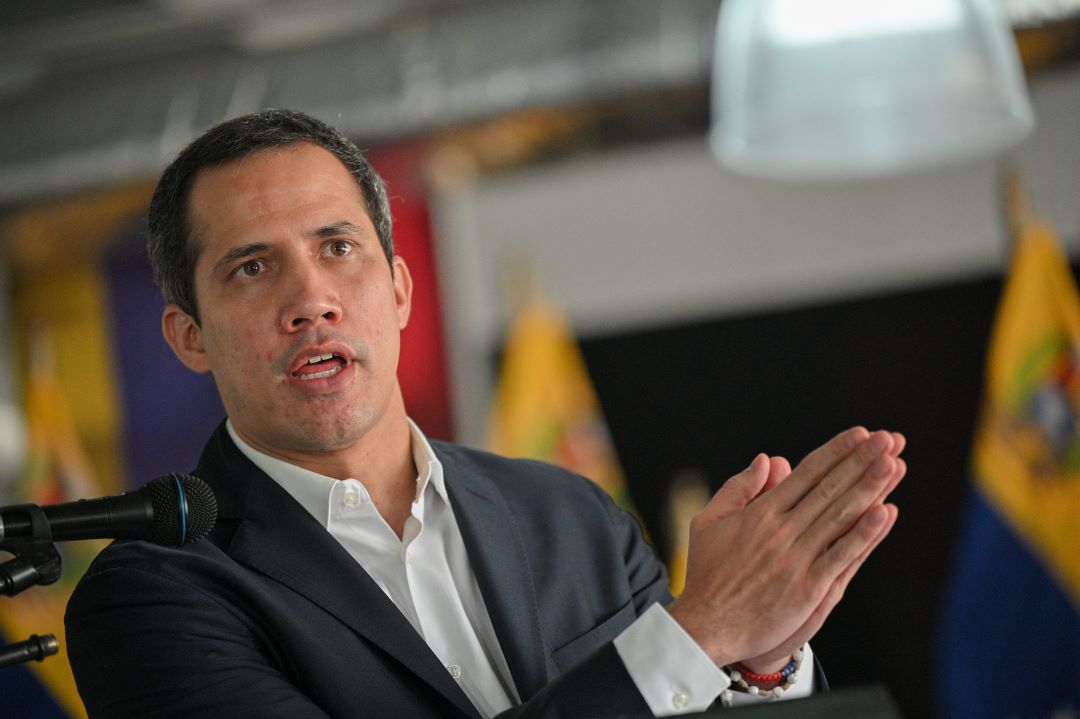
Former Venezuelan National Assembly president and opposition leader Juan Guaidó speaks during a press conference in Caracas, on June 14, 2022. (Federico Parra /AFP via Getty Images)
It’s official: Juan Guaidó is no longer the president of Venezuela.
He never was, of course. Ever since 2019, when Guaidó used his position as head of Venezuela’s opposition-led legislature to declare himself president of an “interim” government that never did much actual governing, observers have had a lot of fun sharing memes of the man announcing that he was everything from the UK’s new monarch to the winner of 2020’s dysfunctional Iowa caucus. But as of this week, Guaidó can no longer even use the title of fictional president.
Venezuela’s National Assembly voted seventy-two to twenty-nine on Monday to strip Guaidó of his nonexistent presidency and dissolve his interim government after nearly four years, with the opposition finally concluding its strategy had failed. Guaidó’s “government” was meant to have stepped in and organized new elections after sitting president Nicolás Maduro was ousted in a US-backed coup, but none of that happened. Instead, with the opposition failing to get the military on its side and with regime change efforts marked by the kind of incompetence you’d normally see in a Police Academy movie, Guaidó was left treading water, struggling to organize new protests the size of those in 2019 and occasionally reminding the world he still existed — as when he endorsed the far-right incumbent Jair Bolsonaro in this year’s Brazilian elections.